Showing posts with label Suzhou. Show all posts

Monday, 14 February 2011

Old Buildings and a Garden and Stuff

I couldn't think of anything witty or interesting for a title. I mentioned previously that I was in Suzhou. It's about an hour outside of Shanghai by bus and has quite interesting things to look at/take photos of. There is a Chinese saying that goes "Above there is heaven [or paradise], below is Suzhou". There are a couple of rather nice preserved old school high walled gardens that you generally see in Chinese films that house aristocrats/bureaucrats.

I went to a couple of them, but the one that is generally somewhat famous is called 'The Humble Administrator's Garden'. It's considered one of the finest in southern China. The footprint of the whole place is quite big, some 50'000m2 (I may have googled that) and it's a bit less than 500 years old. It was cut up and divided at various times over the years, but was pretty much sewn back together after the civil war. Anyway. It's an interesting place to wander around. I happened to go the week before Chinese New Year (新年快乐, by the way), so it was pretty quiet, and there was still a little snow lying around so it was very picturesque. Well, sort of. It was nice as there were so few people around, as it probably gets heaving in the summer, but since it is still winter there are just about no pretty colours. It's all a bit grey. Which is good for me, as you aren't really missing out with black and white.

Next to where I was standing there is pavilion where you can sit and look across the rather large pond/small lake thing, and see the pagoda in the background. Annoyingly there were people sitting there doing just that so, I stood to the left and got pretty much the same view. 

 A lot of effort goes in to these things, they are very interestingly sculpted gardens and lots of different pavilions so you can sit and enjoy the different scenery from different view points.

 There is something special about this corridor, something to do with the length of it and the square holes in the wall, and looking through it. I wasn't quite paying attention at this point when it was explained to me, but revel in it's wonder if you will.
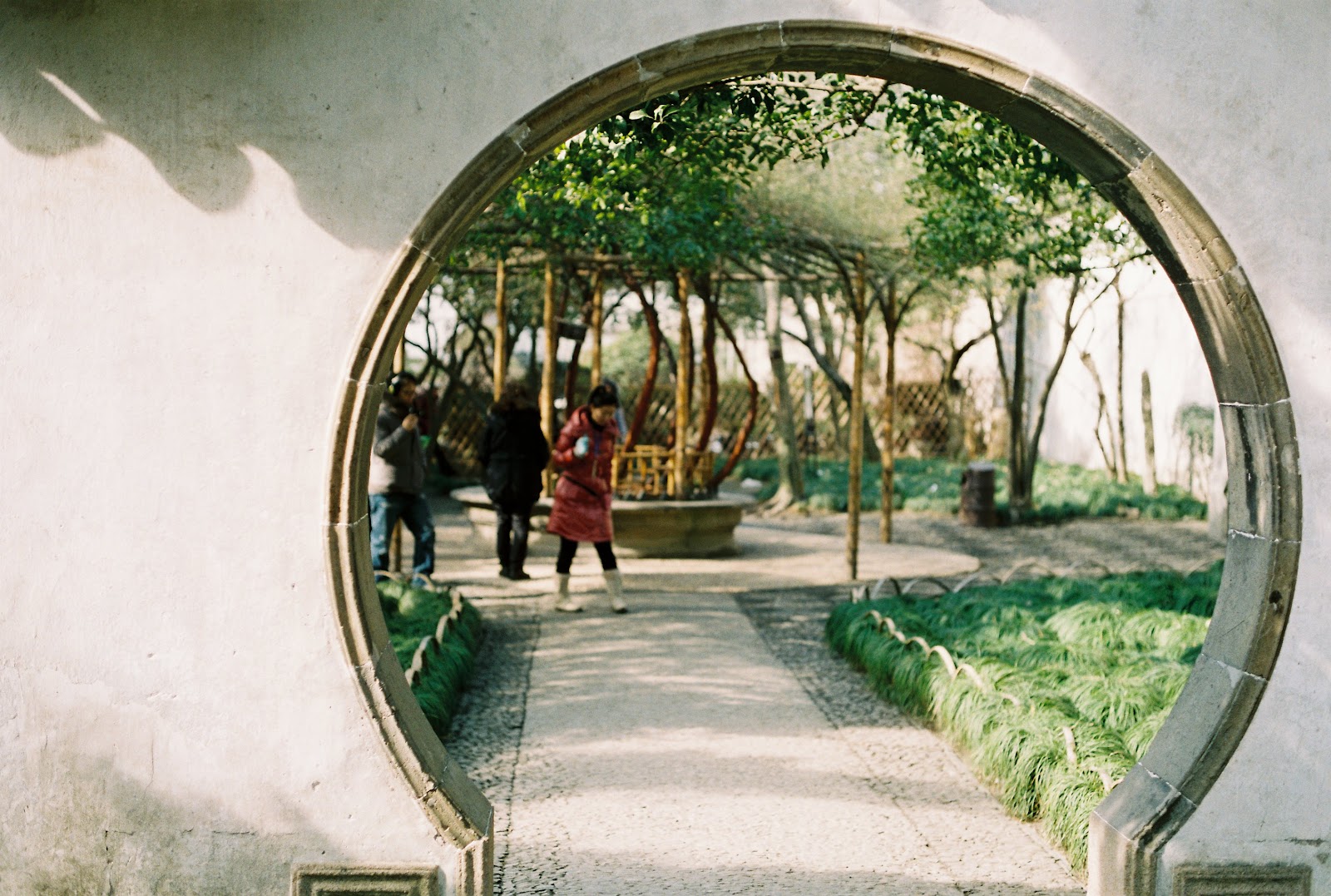
I'm slightly annoyed about this photo for a couple of reasons. I cut the bottom of it off, because I was trying to take it quickly, but mostly because I stood there for ages trying to frame in a nice way, and there was not a single person walking around. As soon as I wanted to take the picture, these people started walking past. Well not these people, but just a bloody great long trail of them and not one cottoned on to the fact that I wasn't quite interested in taking pictures of them. I didn't really have the patience to wait any longer either. It's intentionally off centre though - I feel I should point that out... 
As is the next one.

 This is just the other side of it. I have been meaning to find out why they have doorways like this.

I will try and head back when the weather is better because I imagine the colours would be quite impressive. Particularly for these.
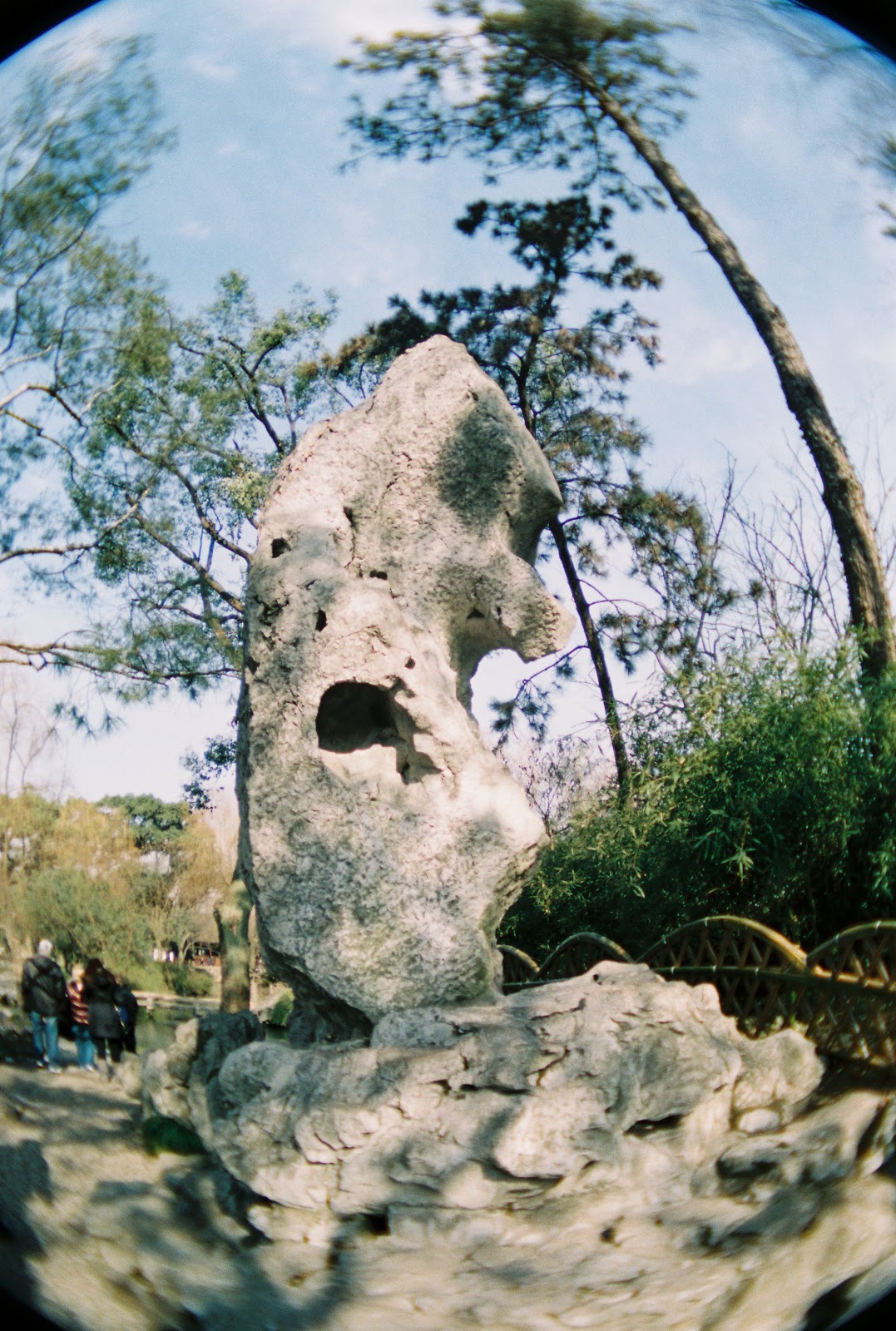
It was a nice day, and I liked the look of this thing. 

 I would have liked to have been closer to catch this kid running. But as you can probably guess from the slightly off angle I was in a hurry to take this (actually, these are usually slightly skewed).

 Like so. I was trying to get the doorway and the open window and make it look cool and interesting, but I probably should have moved back.


I just like the way there is still snow on the ground. Stupid people wouldn't get out of my way, and well I have a no doctoring pictures policy (bar that one from Bristol. Shhh).

Tuesday, 25 January 2011

Many Hands Make Light Work

I have a confession to make - well some explaining to do at least: I recently spent some time using a digital camera. I have a legitimate reason for this. One that is rather irrelevant at this point. Either way. I needed to practice using one. Now, I'm not a particularly big fan of digital cameras; I think they are needlessly complicated sometimes, and I hate autofocus, and yes I am sure you can get around it, but I am not inclined to learn this malarky when I have perfectly good film cameras.

Anyway. Thanks to some rather fancy technology, you can get these little extension bits to digital cameras (some of them at least) and mount manual lenses onto them. As I have mentioned I use an old Olympus OM-1 as my default camera (I actually also use an OM-2, but that's also another story, for another blog post - most likely the next one). I have the use of an Olympus Pen, which is a pretty nice bit of kit. But as it stands I can whack on my OM lenses to the Pen. So this post consists of digital images that I have taken recently (my first actual attempt being some random shots of Shanghai from ages and ages ago when I felt like a wander about the city - but that was a pokey little camera that I was also trying to get used to using).

I went down to Suzhou for the day. It's very picturesque, lots of things to see. I went mainly to see some rather elaborate gardens and a water village, but I managed to get a chance to go around a silk factory. Silk Factory No. 1 as it is somewhat formally known. It's rated as the best in China, and as China is rather famous for it's silk, it's a pretty big deal. Now as I wasn't originally planning on going to see this place, I was somewhat uninclined to use up the films that I was carrying, so I figured it was the perfect opportunity to try out this digital camera, since I had brought it along anyway. I was also using a 50mm lens, also something that I haven't actually used a whole lot of in the past year. My first blog post with pictures is the only other example of my using a 50mm wide angle lens. I had found it a strange lens to get used to, and was more interested in using my 35-135mm and 35-70mm which are basically my two standard lenses I use all the time for obvious reasons. Anyway. What follows are some images of me wandering about a small factory and what I saw, using a camera I was not used to, and a lens I was not used to either. The title of this post will make sense.


So silk is quite interesting stuff. The way it is farmed is just as interesting. Here a woman is sorting cocoons, separating bad ones from the good ones.


After they are separated they are put in hot water and the threads attached to these things that run it all together in spools. You can't really see what the woman is holding, but trust me she is holding a bit of silk. Did you know silk is actually just silkworm vomit? Well pretty much. The cocoon is the silk and the silkworm is killed before it turns into a moth. 


The thread that comes out of a silk worm is one single piece and can be more than 1000 metres (yes, one kilometre) in length. Eight strands of silk are wound together to make one thread since one alone is too thin (this is a very basic run down of the procedure, but it's interesting nonetheless).


Moving away from hands for the minute, but this is a cool image.


The main area where the threads are run into spools is quite a long room with a lot of people working on them at one time.


Also a cool picture. Tools make things work too.


This is a woman opening up the cocoon and getting rid of the larvae. They stretch out the opened cocoon once it has softened in the water. The strange thing standing up is what the silk is stretched over.


This is a better view.


They move it from a smaller one, to a larger one seen here.


Larvae from the cocoon.


After it's all dried and and spooled, they make all sorts of things, here four women are stretching it from something that is about a foot squared, to something the size of a mattress.


And then made into the blankets... Silk is meant to be better for the lungs, and therefore better for sheets and covers and whatnot, due to the fact that it doesn't kick up dust the way cotton and feathers do.


I love these two photos together.


Fun in the work place it seems...